ECIA GA 2026 Workshops: Shaping the Future of Interior Architecture in Europe
Following the ECIA General Assembly 2026 in Warsaw, members came together in a series of roundtable discussions to explore the future of interior architecture in Europe, addressing shared challenges and opportunities for the profession.
The workshops focused on three key topics: strengthening collaboration within the ECIA community, addressing the challenges of artificial intelligence, and defining a shared declaration for the profession.
Through these discussions, ECIA and its National Organisations (NOs) exchanged ideas and explored initiatives to strengthen professional recognition, encourage collaboration and create greater value for members across Europe.
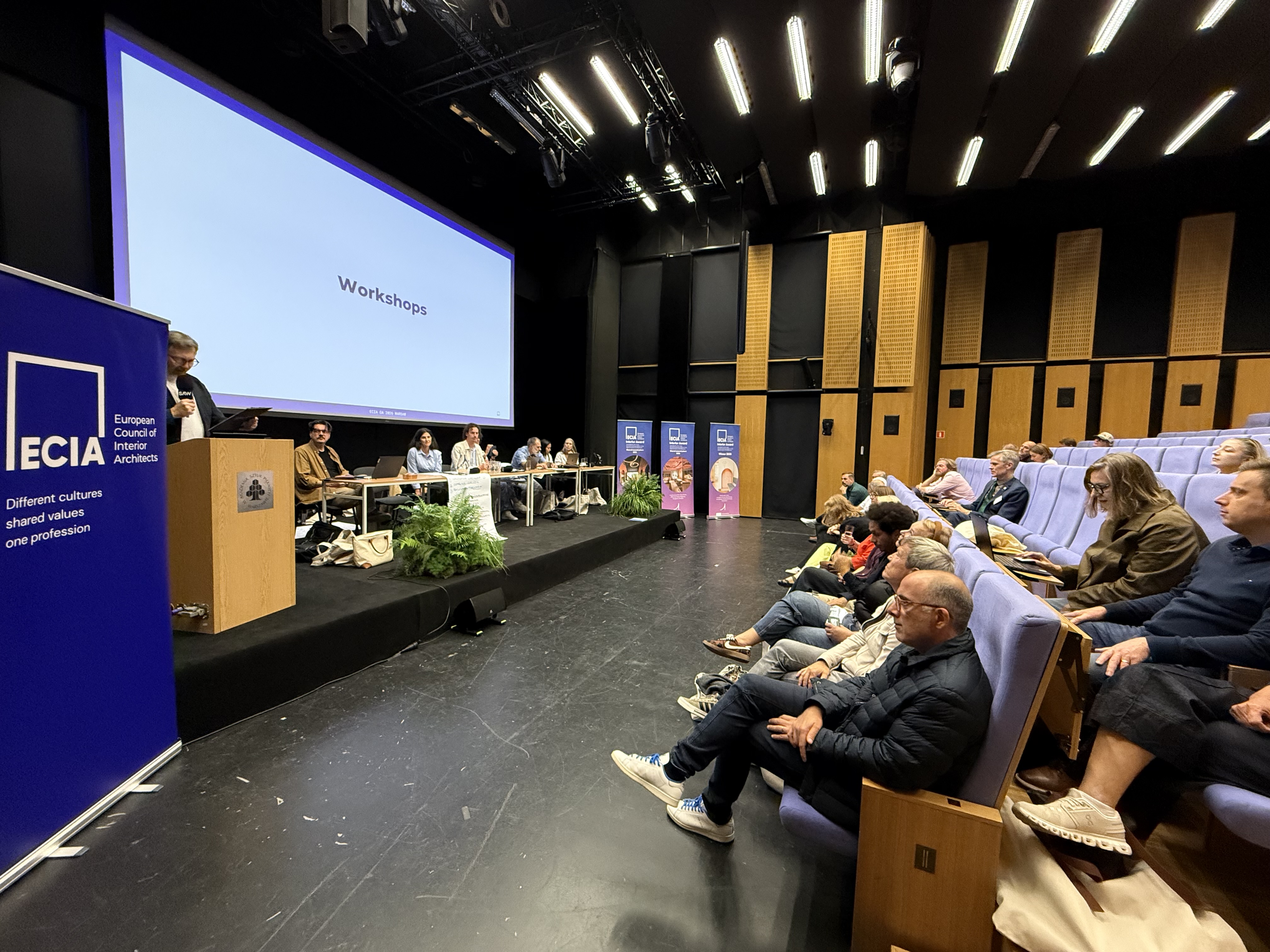 ECIA 2026 - Workshops
1. Strengthening Collaboration Within the ECIA Community
One of the key discussions focused on strengthening collaboration within the ECIA community, identifying current challenges and exploring opportunities to improve communication, visibility, knowledge sharing and professional development.
The workshop generated several proposals, organised into three timeframes:
Short term (0–12 months)
- Strengthen networking and encourage participation through shared activities and improved communication.
- Map and showcase members' work across Europe, celebrating the diversity of interior architecture practices.
- Engage with students during university orientation weeks and encourage professional membership.
- Explore community management initiatives and simpler membership renewal processes.
Mid term (1–3 years)
- Develop mentorship programmes connecting experienced professionals with emerging talent.
- Improve communication and knowledge sharing between ECIA and its National Organisations.
- Encourage cross-border collaboration through working groups, events and European awards.
- Highlight the value of professional membership and encourage greater participation.
Long term (3–5 years)
- Establish educational partnerships connecting academic institutions with professional practice.
- Develop commercial partnerships through National Organisations, creating opportunities for professional growth.
- Explore more accessible and inclusive membership structures.
These proposals represent a starting point for future action, driven by a shared ambition to make ECIA a more active, visible and connected European network.
Our strength lies in our community. By sharing knowledge and working across borders, we can strengthen our collective voice throughout Europe.
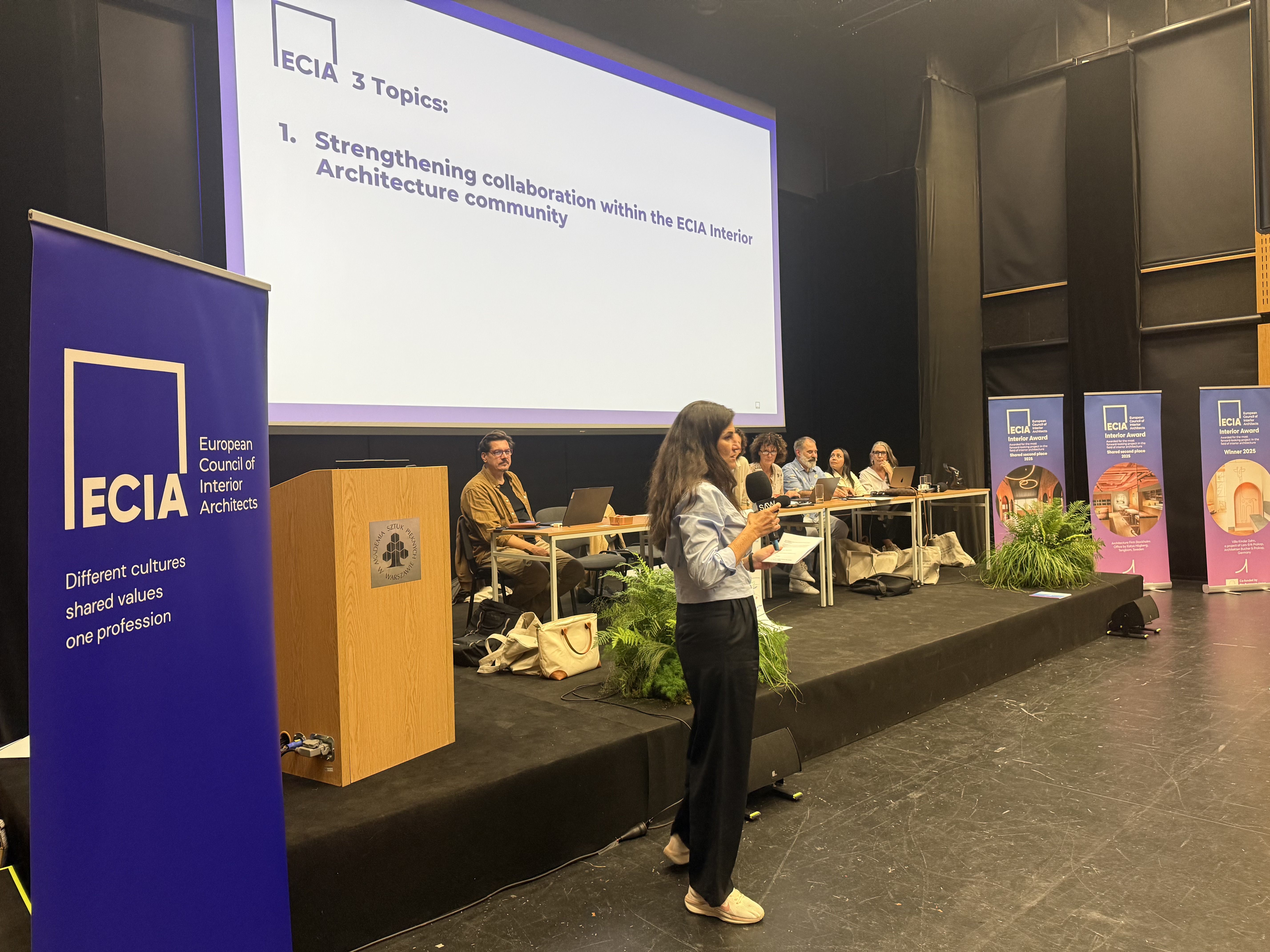 ECIA 2026 - Strengthening Collaboration Within the ECIA Community
2. AI Challenges: Adapting to the Future of Interior Architecture
Another key discussion focused on the growing influence of artificial intelligence within interior architecture, exploring the opportunities and challenges it presents for professional practice, education and creativity.
Members reflected on how AI is transforming design processes and workflows, while highlighting the importance of maintaining the knowledge, skills and human judgement that define our profession.
The workshop identified several key considerations:
- AI as a professional tool: Explore how AI can support design processes, automate routine tasks and improve efficiency without replacing professional expertise.
- Education and professional development: Address the impact of AI on students and emerging professionals, protecting essential technical skills, critical thinking and design knowledge.
- Creativity and design quality: Preserve human creativity, experience and judgement in developing responsible and meaningful design solutions.
- Intellectual property: Raise awareness of authorship, ownership and the ethical implications of AI-generated content.
- Future professional opportunities: Explore how AI may transform entry-level roles and the delivery of interior architecture services.
The discussion highlighted the importance of embracing technological innovation responsibly, ensuring that AI supports rather than replaces the expertise of qualified professionals.
The challenge is not simply to adopt new technologies, but to use them responsibly while preserving the creativity, knowledge and human-centred approach that make our profession unique.
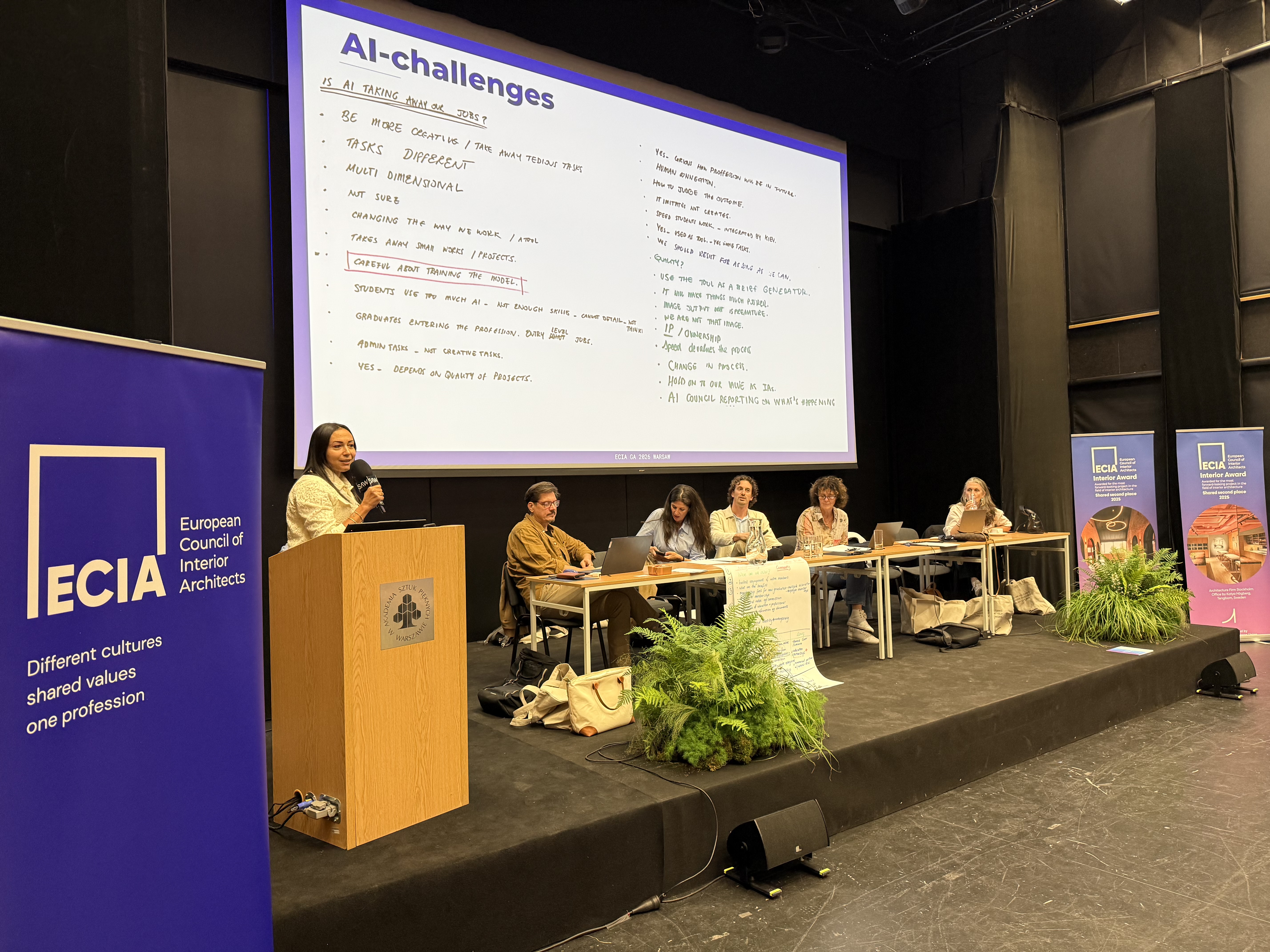 ECIA 2026 - AI Challenges
3. Defining Our Profession: Towards a Shared Declaration
The final workshop focused on defining and communicating the identity, values and responsibilities of interior architecture professionals, exploring the development of a shared declaration for the profession across Europe.
Members reflected on how interior architects perceive their profession and how their work is understood by clients, institutions and society.
The discussion highlighted several key principles:
- Professional identity and recognition: Strengthen the visibility of interior architecture and communicate the expertise and responsibility involved in professional practice.
- Ethics and responsible design: Promote ethical, inclusive and sustainable approaches that respond to environmental, social and human needs.
- Designers as agents of change: Recognise interior architects as professionals who shape experiences, transform environments and contribute to positive social change.
- Human-centred design: Highlight the importance of creating spaces that improve wellbeing, accessibility and quality of life.
- A shared European identity: Identify common professional values while respecting the diversity of national contexts and practices.
The workshop emphasised the importance of communicating the value of interior architecture beyond aesthetics, recognising its contribution to the way people live, work and interact with their environments.
A shared declaration could help strengthen professional identity, improve recognition and communicate the responsibilities and values of interior architects throughout Europe.
Interior architecture is about more than designing spaces. It is about shaping experiences, responding to human needs and improving people's lives.
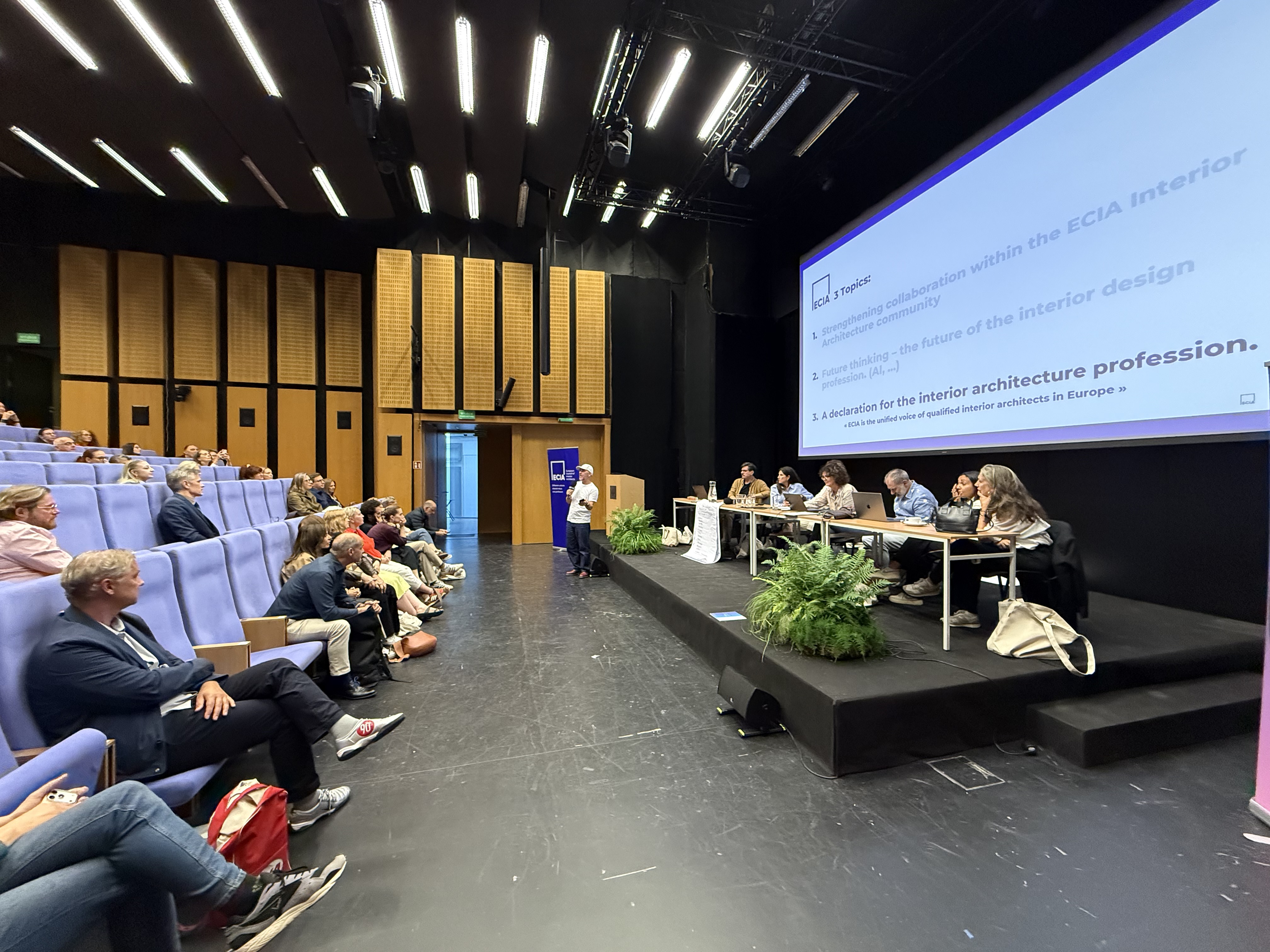 ECIA 2026 - Defining Our Profession
Building a Stronger Future Together
The three workshops reflected a shared ambition to strengthen the European interior architecture community, respond to emerging challenges and reinforce the recognition of our profession.
From improving collaboration and exploring the responsible use of AI to defining our professional values, these discussions provide a foundation for future initiatives and collective action.
Together, ECIA and its National Organisations can continue building a stronger, more connected and recognised European professional community.
These ambitions reflect our shared mission:
“ECIA is the unified voice for qualified interior architects in Europe.”